“Should I use 5-axis CNC machining for my part?”
This is easily the most common question we get from new engineers and buyers.
A lot of people go into it assuming more axes = better, no exceptions. But the truth is, specifying 5-axis for a simple flat bracket is like buying a heavy-duty truck to commute to work — it will get the job done,
but you’re paying for a ton of capability you will never use.
After thousands of projects, we’ve learned that the right process is the one that matches your part geometry, volume, and tolerance needs — not the one with the most impressive spec sheet.
This guide breaks down how 3-axis, 4-axis, and 5-axis machining actually perform on real parts, how to choose, and the hidden costs of picking the wrong one.
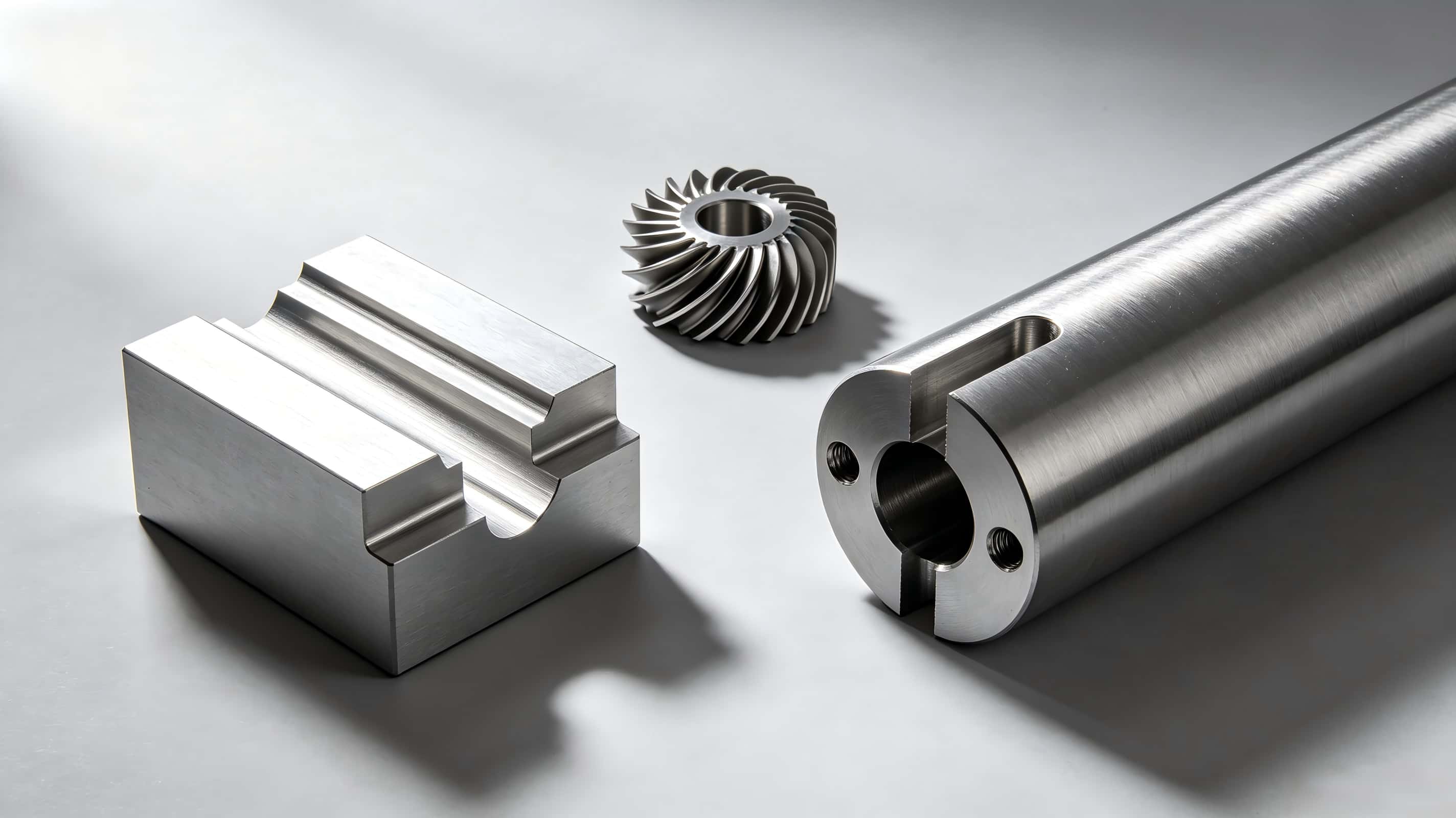
3-axis is the industry baseline. The tool moves left-right, front-back, up-down. The part stays completely still on the table.
Best for: Simple prismatic parts — plates, brackets, housings with features on only one or two faces. The catch: If your part has features on multiple sides, you have to flip it and re-clamp it.
Every re-clamp introduces positioning error. Do it three times, and the error stacks up fast. Great for prototypes and simple parts. Bad for tight-tolerance multi-sided parts in volume.
4-axis adds a rotary indexer that spins the part 360 degrees.
This is the most underrated option in our opinion. It fixes 80% of the problems with 3-axis, at a fraction of the cost jump to 5-axis.
Best for: Parts with features on four sides, cylindrical components, angled holes, radial slots. You still have to flip the part once to machine the bottom face,
but you eliminate all the custom side fixtures and repeated setups you’d need with 3-axis. For most medium-complexity industrial parts, 4-axis is the cost sweet spot.
Most buyers don’t realize this and overspec 5-axis.
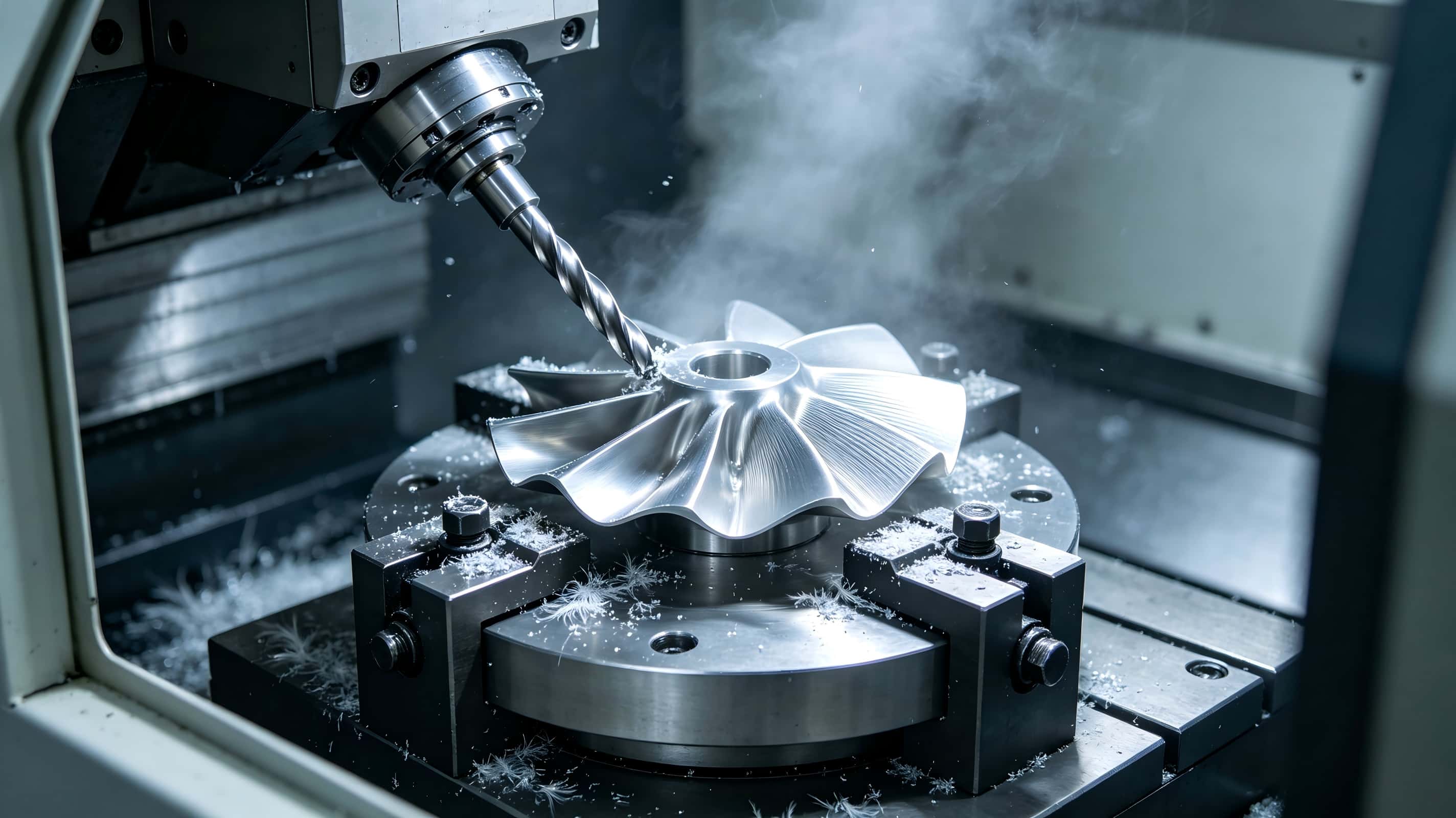
5-axis adds a second rotary axis. The tool can approach the part from almost any angle.
This is the real deal for complex parts. One setup, done. No cumulative error, perfect concentricity, clean undercuts that you can’t get any other way.
Best for: Complex curved geometries, undercuts, deep angled cavities, aerospace and medical components. The downsides: Higher hourly rate, more complex programming,
longer setup time for simple jobs. If your part needs it, it’s worth every penny. If it doesn’t, it’s wasted money.
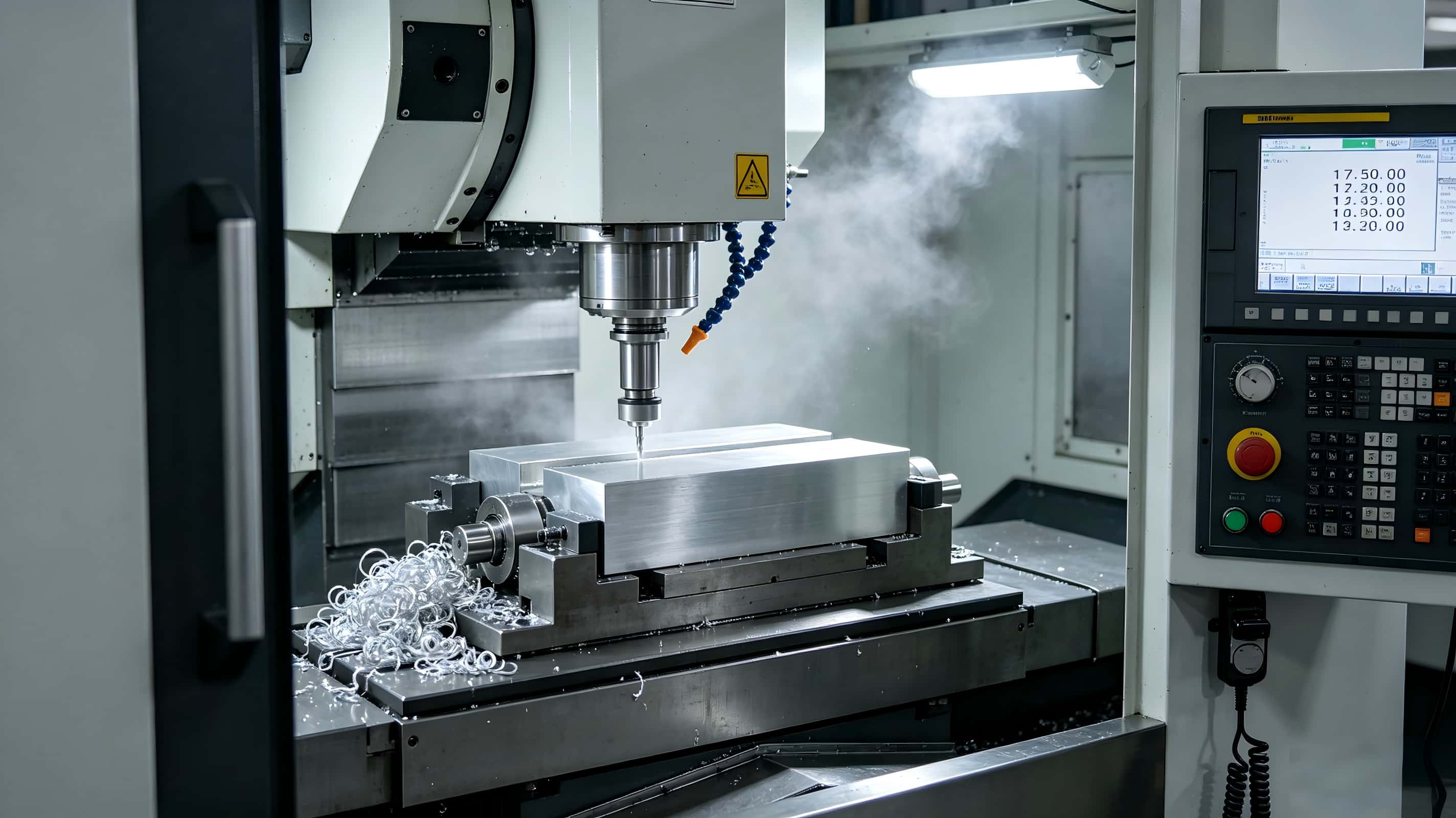
These numbers come from actual production runs of a mid-complexity 6061 aluminum quick-release test fixture — the same part we supply to battery testing clients in the UK.
|
Comparison Dimension |
3-Axis CNC |
4-Axis CNC |
5-Axis CNC |
|
Total setups required |
3 setups + custom auxiliary fixture |
2 setups (top/sides + bottom flip) |
1 single setup |
|
Machining cycle time (per part) |
18–22 minutes |
10–12 minutes |
8–9 minutes |
|
Typical bore-to-shaft concentricity |
±0.02–0.03 mm |
±0.01–0.015 mm |
±0.005–0.008 mm |
|
Feature positional tolerance |
±0.03–0.05 mm (setup variation risk) |
±0.015–0.02 mm |
±0.01 mm |
|
Surface roughness (Ra) on complex profiles |
1.6–3.2 µm (often needs hand finishing) |
0.8–1.6 µm |
≤0.8 µm (burr-free) |
|
Manual deburring required |
Yes, significant |
Minimal touch-up only |
None |
|
Scrap rate (100-piece batch) |
8–12% |
2–4% |
<0.5% |
Note: Standard positional accuracy for milling is approximately ±0.001″ for 3-axis, ±0.001″ / ±0.01° for 4-axis, and ±0.0005″ / ±0.008° for 5-axis.
The biggest takeaway most people miss: 5-axis has a higher hourly rate, but it’s so much faster per part that for 200+ pieces, it actually costs less per unit than 3-axis. You eliminate setup labor,
fixture costs, and scrap. For small quantities, though, 3-axis or 4-axis will almost always be cheaper.
|
Project Scenario |
Recommended Process |
Core Reason |
|
Simple geometry, features on 1–2 faces |
3-Axis CNC |
Lowest cost, fastest setup |
|
Multi-side features, moderate complexity |
4-Axis CNC |
Eliminates re-clamping, reduces positioning errors |
|
Complex geometry, undercuts, 5-face machining |
5-Axis CNC |
Single setup, best precision, zero rework |
|
1–5 prototypes, budget-sensitive, ±0.03 mm acceptable |
3-Axis CNC |
Low upfront cost; hand finishing acceptable for test runs |
|
20–200 pieces, standard industrial tolerance |
4-Axis CNC |
Best cost-performance ratio; low scrap and rework |
|
200+ pieces, or tight concentricity ≤±0.01 mm |
5-Axis CNC |
Minimizes scrap, shortens lead time, lowest long-term cost |
We see this all the time.
Buyers pick 3-axis to save a few dollars an hour, then end up paying twice as much in rework, scrap, and delayed delivery. Multiple setups mean more labor,
more fixture cost, and more opportunities for error.
On the flip side, we regularly get RFQs for simple flat plates that specify 5-axis machining. That’s just throwing money away. A 3-axis machine will make that part faster, cheaper, and just as accurate.
Our standard approach: We do a free DFM review on every project. If we can make your part on a 4-axis machine and hit your specs, we’ll tell you that.
If a small design change — adding a 0.5mm inside radius, for example — lets you use 3-axis and cut your cost in half, we’ll tell you that too. Our goal isn’t to sell you the fanciest process.
It’s to get you parts that work, at the lowest total cost.
When evaluating suppliers, verify these five critical points:
1.What is your standard tolerance capability, and which standards do you follow? (Look for specific numbers referenced to ISO 2768, ISO 286 or GD&T.)
2.How do you control accuracy across multiple setups? (Look for custom dedicated fixtures and in-process probing.)
3.What is your typical scrap rate for production runs? (A reliable precision shop should quote <1% for stable volume production.)
4.What inspection documentation do you provide? (Expect CMM reports, material certificates and first article inspection reports.)
5.What is your documented on-time delivery rate? (Look for 98% or higher with transparent tracking.)
There is no universal “best” CNC machining process. The right choice always depends on your specific part geometry, volume, tolerance needs and budget.
3-axis machining remains the most cost-effective option for simple flat parts. 4-axis machining balances cost and capability for most multi-sided components.
5-axis machining delivers unmatched precision and consistency for complex geometries and high-volume production.
Not sure which process fits your project? Send us your CAD files and order quantity. We’ll tell you straight which process we’d use, why, and what it will cost.
No sales pitch, no upselling — just honest production advice and a no-obligation formal quote within 24 hours.
Tel : 0755-23596843
WhatsApp : +86-13267211181
Email : sales02@gt-proto.com
No.18, Shaqi Community Center Road, Xinqiao Street, Baoan District, Shenzhen, Guangdong Province, China 518104